Introduction & Scope: Introduced in the Lok Sabha on August 20, 2025, by Home Minister Amit Shah, the Bill aims to amend key articles of the Constitution—Article 75 (for the PM), Article 164 (for state CMs and ministers), and Article 239AA (for Delhi’s government)—to mandate removal from office if arrested and held in custody for 30 consecutive days on charges punishable with at least 5 years of imprisonment. WikipediaThe Indian Express
Key Mechanism:
Union Ministers/PM: The President must remove the officeholder by the 31st day of detention if no resignation.
State Ministers/CMs: The Governor removes them similarly, or they automatically cease to hold office. Wikipedia
Rationale (from Bill’s Statement of Objects): The government avers that individuals detained under serious criminal charges should not retain public authority, as this erodes public trust and counters constitutional morality. The Indian ExpressWikipedia
Political Context: Critics spotlight potential misuse—central agencies could arrest opposition leaders to topple governments politically. Rackets in Parliament, protests, and calls for a Joint Parliamentary Committee underscore its contentious nature. The Economic TimesIndiatimesThe FederalThe Times of India
A Supreme Court insight is especially illuminating:
“No arrest can be made just because it is lawful for police officers to do so… The existence of the power of arrest is one thing but justification for the exercise of it is quite another.”
This underscores a critical distinction between the lawfulness and justifiability of arrest, grounding the debate in due process, judicial oversight, and constitutional rights. Ground News
Implication: Detention—even if lawful—does not automatically mean retention of office should cease. The Bill’s design bypasses traditional checks and balances, potentially enabling arbitrary removals without trial.
Analysis:
The Bill “fills a perceived gap” where detained leaders—like Arvind Kejriwal, Senthil Balaji—continued governing from jail.
Yet, the 30-day automatic disqualification clause may empower police, judges, and lawyers in disproportionate ways.
It’s vulnerable to misuse as a political weapon—e.g., orchestrating prolonged detention to destabilize opposition-led states.
It may violate the “basic structure” doctrine, especially principles like federalism and due process. The Federal
M.K. Stalin (TN CM): Condemned the Bill as a “black bill” and “dark day” for Indian democracy—demoting it to an authoritarian, unconstitutional move. The Times of India
Priyanka Gandhi, Abhishek Manu Singhvi: Labelled it “draconian,” warning that biased arrests could eviscerate democratic governance. IndiatimesThe Indian ExpressThe Economic Times
Prashant Kishor: Though unusual, he supported the Bill—calling it a necessary step to discourage governance from jail. The Times of India
Let’s encapsulate the main themes and the persona focus with dynamic hashtags:
#PowerOfArrest, #DueProcess, #RuleOfLaw, #ConstitutionalMorality, #30DayRemoval, #BasicStructureDoctrine, #AccountabilityOrAbuse, #DemocracyAtRisk, #JusticeVsPolitics
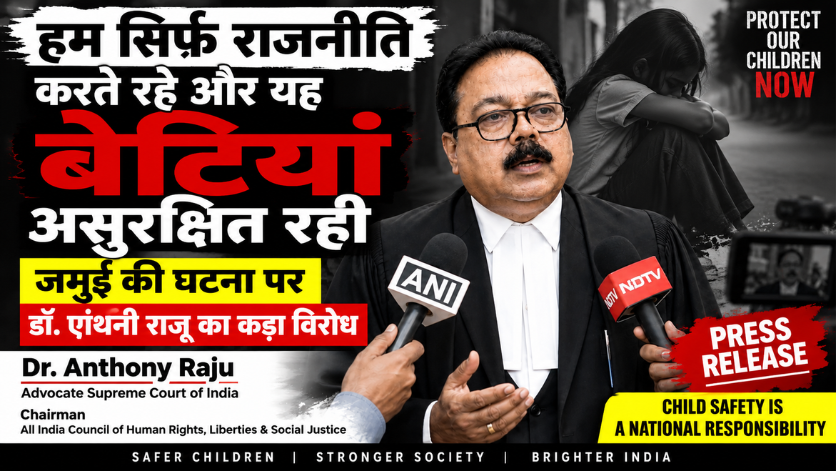
#DrAnthonyRaju, #TopCriminalAdvocate, #HumanRightsChampion, #Article21Soul, #SupremeCourtVoice
“The 130th Amendment Bill threatens basic democratic safeguards: lawful detention ≠ justified removal. Judicial wisdom reminds us: ‘The power to arrest is one thing; justification is another.’ Is this reform or regress?
#PowerOfArrest #DueProcess #RuleOfLaw #DemocracyAtRisk #DrAnthonyRaju”
| Aspect | Details |
|---|---|
| Proposal | Removal of PM, CMs, ministers after 30 days in custody (5-year+ offences) without conviction. |
| Objective Claimed | Prevent governance from jail; uphold constitutional morality. |
| Criticisms | Risk of misuse; undermines innocent-until-convicted; central overreach. |
| Legal Concerns | Bypasses due process; challenges basic structure doctrine; concentrates power in arresting agencies. |
| Expert View (SC) | Arrest must be justified, not just lawful. |
| Expert (Hegde) | Potential for political weaponization; impacts separation of powers and federalism. |
| Hashtags | See above. |
The 130th Amendment Bill's framing—automatic removal after 30 days of detention—turns the law of arrest into a lever of political displacement. The Supreme Court’s highlighting of “justified exercise” of power resonates deeply here; democracy requires more than legality—it demands fairness.
Dr. Anthony Raju, with his unwavering commitment to Article 21 and human rights, would likely caution that lawful power without moral and constitutional justification erodes liberty, not preserve it.
Enter your email address below and subscribe to our newsletter